
Safety and HSE
Safety, testing and records at site.
The delivery plan includes source verification, testing, operating controls and documented daily work.
Quality controls
Checks before production.
Material and site information guide the production plan. Testing and record keeping support decisions during execution.
- 01Source and reserve verification
- 02Bathymetry and reserve assessment
- 03Sieve analysis, Proctor, CBR, Atterberg and salinity testing
- 04Daily records and project sign-off
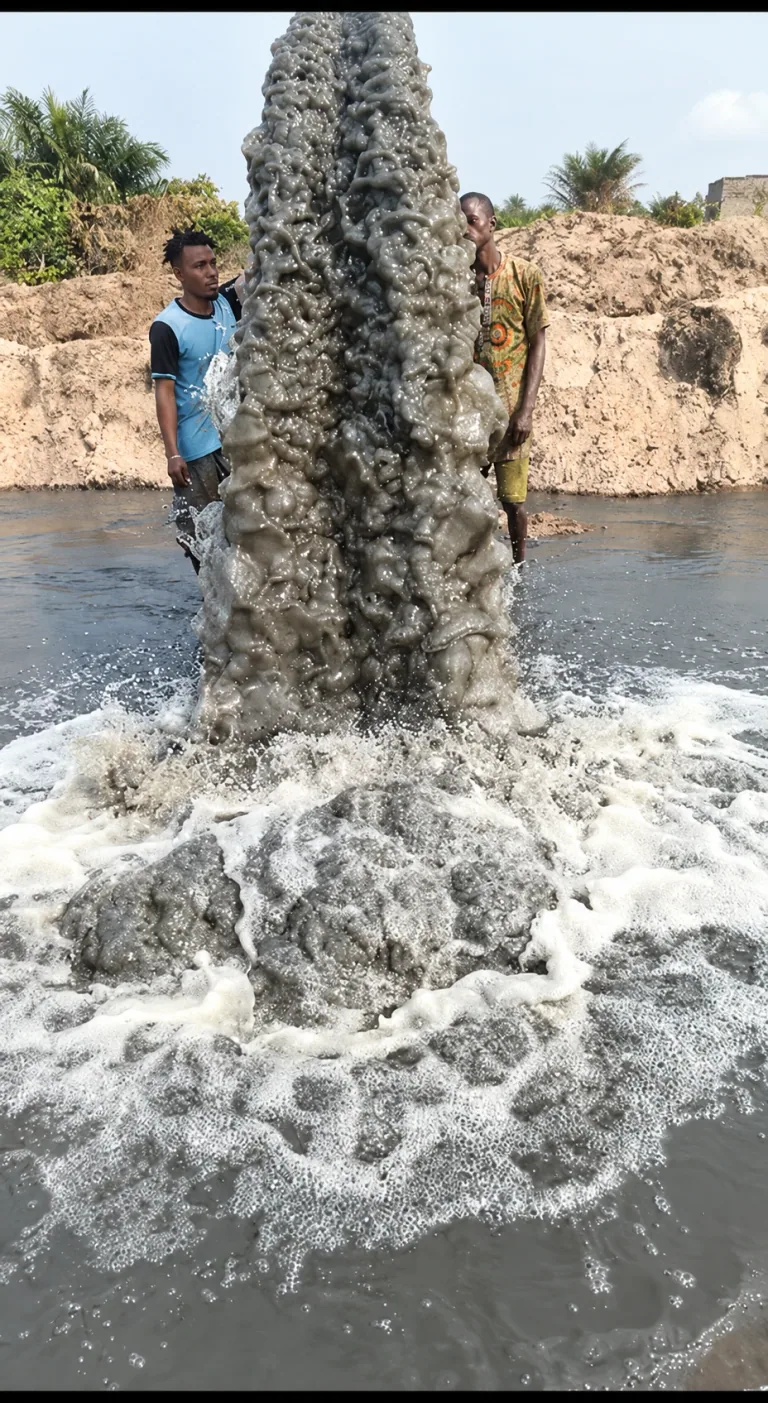
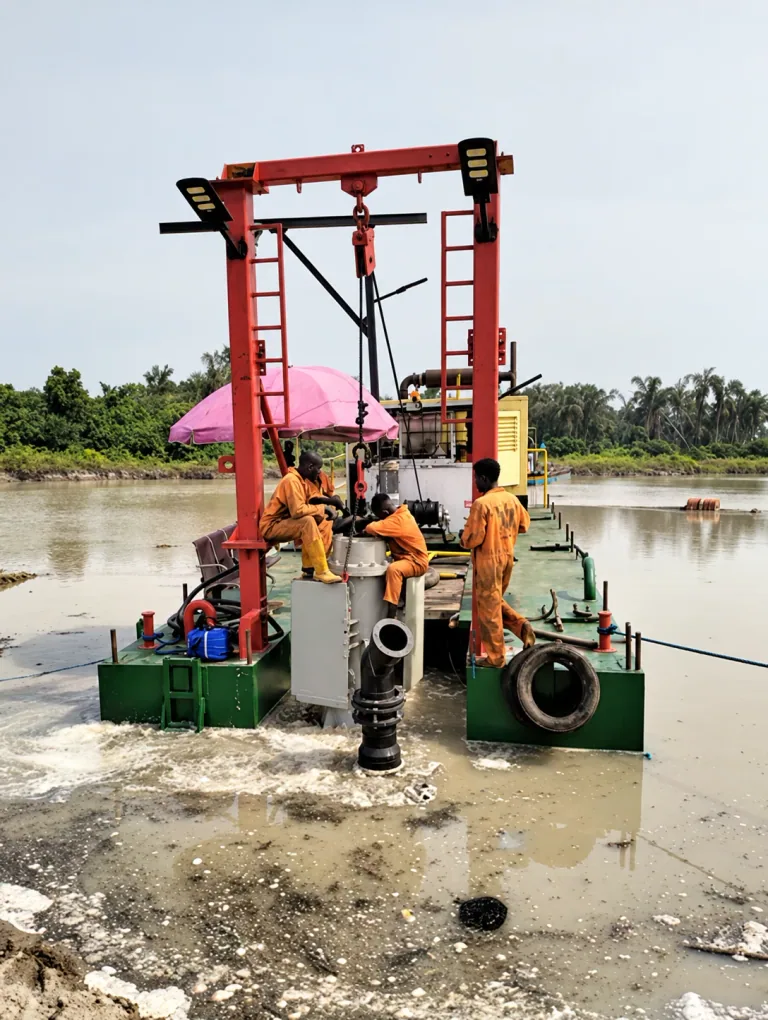
Health, safety and environment
Work controls used at site.
Zero-incident policy
PPE and toolbox talks
SIMOPS awareness
NIWA and LASWA compliance
Spill response
Requirements are applied according to the project, location and scope of operation.
Technical controls
Testing and operating requirements.
Testing follows the project specification and contractor approval process.
View source and reserve verification
- Approved/licensed source boundaries; RTK/GPS and bathymetric survey.
- Boreholes, vibrocores or equivalent subsurface investigation where required.
- Usable sand thickness, exclusion zones and recoverable reserve calculation.
- Periodic resurvey to reconcile extraction against production records.
Company profile: slide 15.
View laboratory testing
- Particle-size distribution, sieve analysis and percentage fines.
- Moisture content, bulk density and specific gravity.
- MDD/OMC (Proctor) and CBR when road / subgrade specifications require.
- Atterberg limits where applicable.
- Chloride / salinity, organic or contaminant screening when specified.
Company profile: slide 15.
View material acceptance and quantity checks
- Sample → Test → Approve → Produce → Verify.
- Representative source and discharge-point samples; approved laboratory / engineer-required test matrix.
- Contract-specification acceptance; survey, weighbridge or quantity reconciliation.
- Test frequency, sample custody and acceptance records aligned with the contractor / supervising engineer's ITP and material-source approval process.
Company profile: slide 15.
View marine and environmental safety controls
- Zero-incident policy; compulsory life jackets, helmets, gloves and eye protection.
- Daily toolbox talks before each shift and onsite HSE officers throughout operations.
- SIMOPS procedures for simultaneous marine and land activities.
- NIWA/LASWA vessel-movement and navigation controls; local community engagement.
- Turbidity and siltation control during discharge.
- Fuel handling, spill prevention and spill response planning.
Company profile: slides 4 and 10.
View industrial-pumping restrictions
Non-flammable service only unless OEM confirmation and refinery HSE approval are obtained. Not a primary abrasive sand-slurry dredging pump.
- Commission gradually in clean water; confirm pressure, flow, oil temperature and case-drain behaviour before refinery deployment.
- Tank-cleaning wash-water transfer requires HSE clearance.
Company profile: slides 18–19.